

Caption: “Yes on 83” signs still hang on light posts around the city more than a month after elections.(Photo credit: Todd St Hill)
- Todd St Hill
December 9, 2024
D.C. City Council could revoke the people’s will by blocking funding to Initiative 83
Last month Washington D.C. voters went to the polls to try to force politicians into listening to their will, and they want ranked choice voting, but if you thought a vote was all it would take you’d be wrong.
Initiative 83 won, overwhelmingly, with 71% of the vote across the District. Now D.C. has joined 62 other cities and states that already use some version of Ranked Choice Voting (RVC).
The campaign to win RVC in D.C. has been a bit of a contentious one where fears of disenfranchisement among Black and brown communities, and fears over confusion with a new voting process came to the surface.
Opponents of initiative 83 say the process will burden voters with having to return to the polls multiple times to weed out candidates that don’t meet the 51% threshold.
Barbara Jones, a ward 8 resident and member of ward 8 democrats voted no for Initiative 83 and explained ranked choice voting by saying
“You have to have a percentage to win, right?," "If you have the two highest ones that means you have to come back and vote again.”
“Normally people don’t come back a second time to vote,” Barbara said.
But that’s not how Ruby Coleman, a “Yes on 83” campaign organizer, and double major in political science and political communication says. Ruby said the process is similar to a college student registering for classes.
“You’re on a waitlist for your one class, so you register for another, just in case.”
“We do that everyday, we say ‘if I can’t have my first choice then I’ll take my second choice,’” Ruby said.
But residents in wards where Initiative 83 seems to be most popular have more practical concerns about the future of D.C.’s voting process.
Keneshia Grant, a ward 7 resident and Associate Professor in political science and American politics at Howard University is less concerned for herself and her community, confident that D.C. 's residents and political groups are capable of adapting to D.C. 's changing political landscape.
“I don't really love the idea of ranked choice voting, but I can imagine a scenario where Black politicians figure out how to talk to their people in a way that they can understand what they want to do.” Grant said.
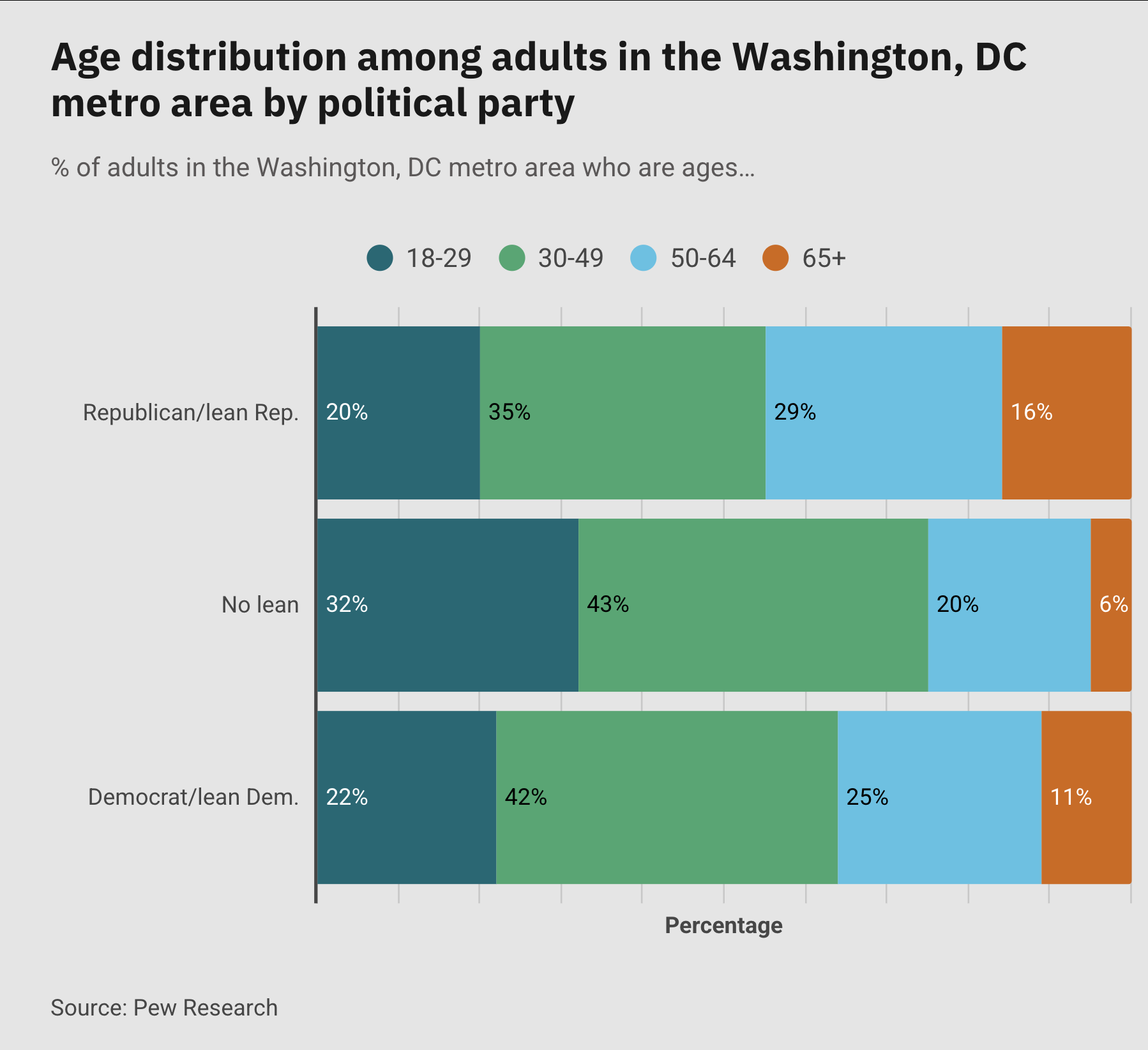
Figure 1: Age distribution among adults in DMV metro area by political party.(Source: Pew Research)
The D.C. democratic party, some members of D.C. city council, and even Mayor Bowser have said they are against the passage of I83, going as far as filing lawsuits and threatening to withhold critical funding needed to implement the initiative.
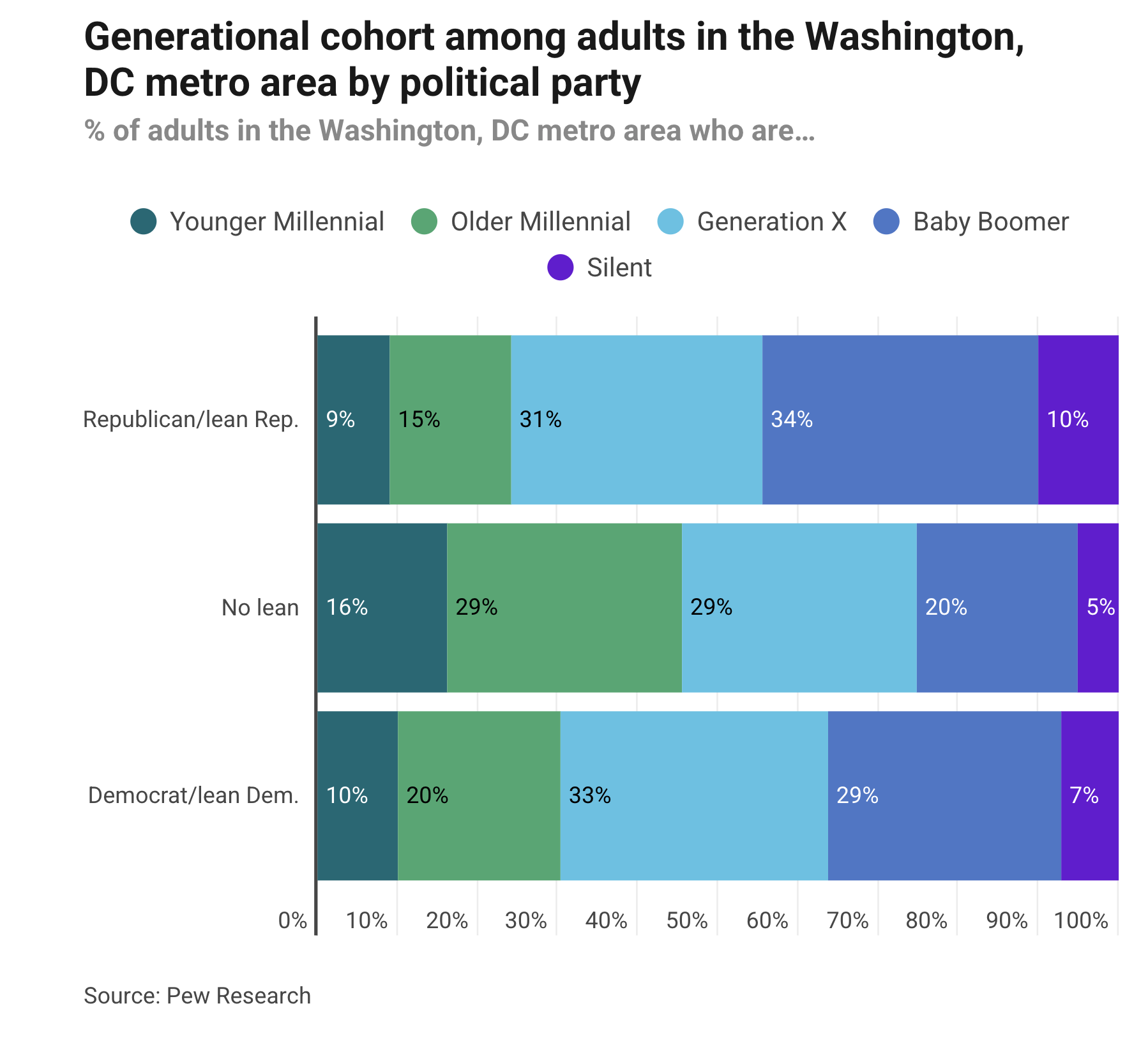
According to a Pew research study from this year, less D.C. residents are affiliated with either major party. Residents 18-49 don’t lean democrat or republican, and more millennials in particular, choose to not affiliate with either party.
But experts and organizers agree, the next hurdle will be implementation,and with some of fiercest opposition to RCV coming from D.C. democrats the route to a new way of voting is still unclear.
Tyler Zimmer Professor of Political philosophy and the philosophies of ethics, race and feminism at the University of Chicago has been critical of the two party electoral system and thinks RCV is a step in the right direction for D.C. but would like to see more structural changes in the future.
In D.C. some of the strongest support for initiative 83 came from many of the Black and brown communities that were predicted to struggle with the new voting system.
Figure 2:Generational cohort among adults in DMV metro area by political party.(Source: Pew Research)
“I’m for anything that would break the kind of stranglehold that the two party duopoly, or two party system has in the US,” he said.
“I think, you know, [if] ranked choice voting helps us get closer to changing that, then I’m for it, but I’d like to see some more, some more radical changes, for sure.”
For now, organizers and supporters of Initiative 83 have entered negotiations with the city council and hope for a positive outcome, but are not optimistic.
And without approved funding from the D.C. city council Initiative 83 is essentially dead on arrival. That’s what Howard University Associate Professor of Political Science, Robinson Woodward-Burns says.
city council won’t pass funding. “So the council will not fund it, and I think the issue will die there. I don't expect the oversight committee in the House to override that.” Robinson, who sits on the board of D.C. Votes, said
Organizers with the “Yes on 83” campaign have entered negotiations with the city council, and canvass are still knocking on doors and talking with residents across the city.
“It’s my hope that the city council upholds the will of the people and includes the implementation of this which includes funding.” Ruby said.
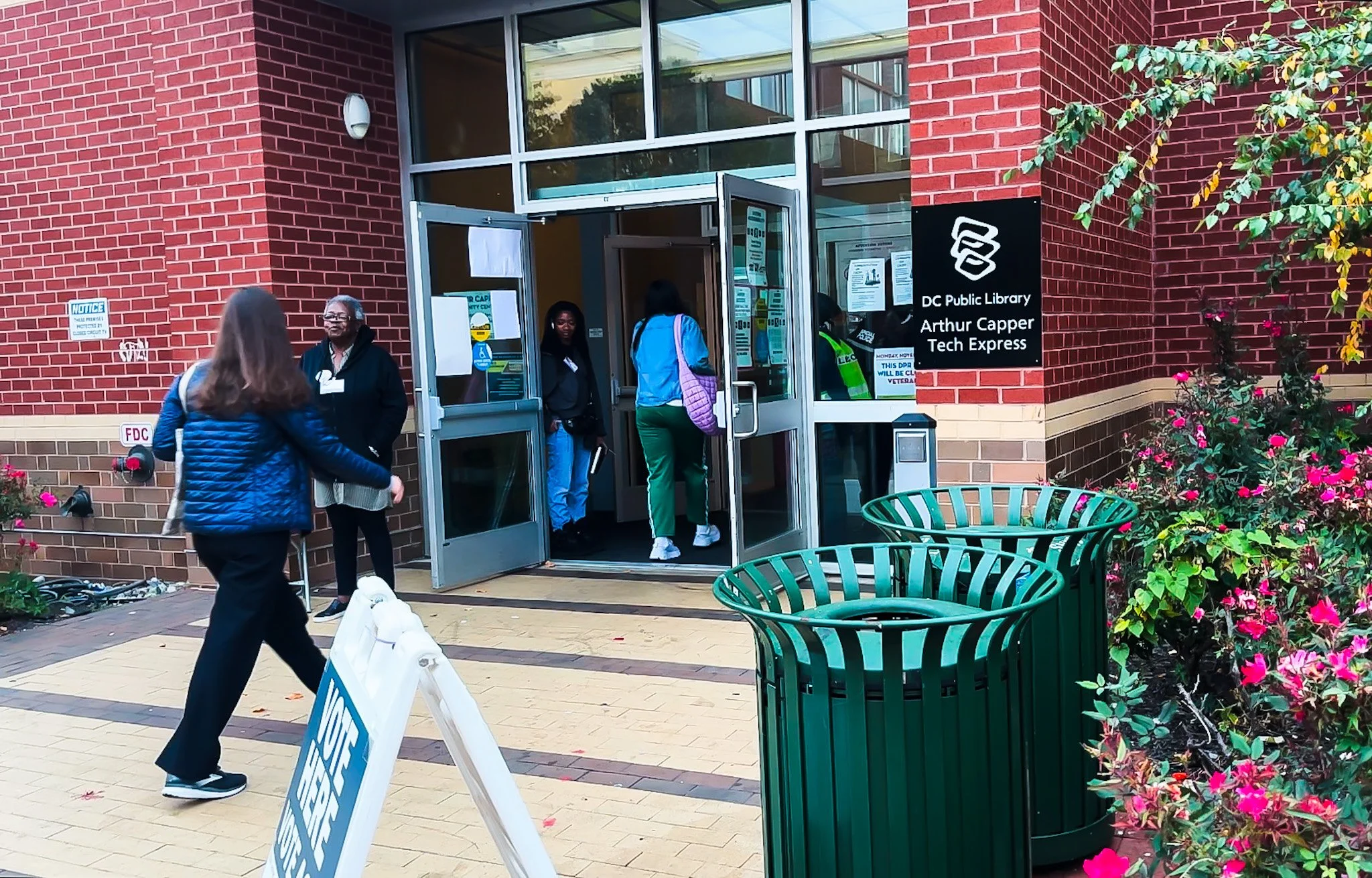
Caption: Voters walking into Arthur Capper Recreation Center to cast 2024 vote.(Photo Credit: Todd St Hill)